Bell
sexual violence and slavery
Listen to the story
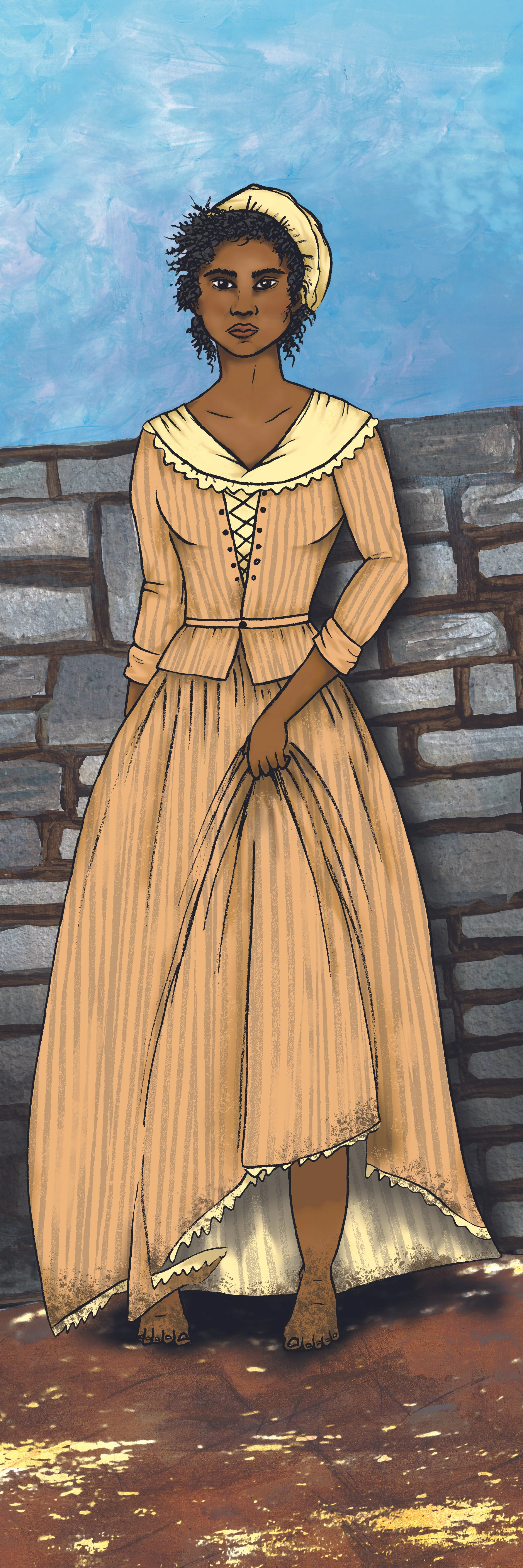
Bell was bought at auction by merchant-butcher George Hipps from ship captain Thomas Venture in Quebec City. She escaped on August 18, 1778, and an announcement was published in the Quebec Gazette the next day. She was described as "mulatto," therefore of mixed race. As in Jacob’s case, in the context of slavery, a person of mixed race is always the outcome of sexual abuse. The announcement states that 15-year-old Bell escaped during the night of August 18 without shoes or socks. It’s possible that her escape was hastened so that she could avoid this type of abuse. A $4 reward was offered.
Illustrated by AMEL ZAAZAA

Read the wanted notice
Bell was found and then escaped again the following October. Once more, a notice was published in the Quebec Gazette. Two weeks later, George Hipps sold her to Lieutenant Governor Hector-Theophilus Cramahé for 1,200 francs. Cramahé then disposed of her by selling her to Captain Peter Napier for 1,080 francs. She was 16 years old at the time. Four years later, Captain Napier’s widow sold Bell, now called Isabelle Grant in the notarized deed, to Francis Daniell and Richard Dalton, Quebec City merchants. The associates already maintained in slavery a Panis man named Jacob; he escaped approximately five months after they acquired Bell.
Trivializing slavery and sexual violence
Given the domestic nature of slavery in Québec, many people tend to downplay its impact on the men and women who were subjected to it. This trivialization of slavery overlooks the fact that they were dehumanized by being sold, uprooted because of the rupture of the family unit, and had no dominion over their own body except when they ran away. Very clearly, sexual violence, the most recurrent aspect of slavery since Antiquity, is forgotten when its domestic aspect is trivialized.
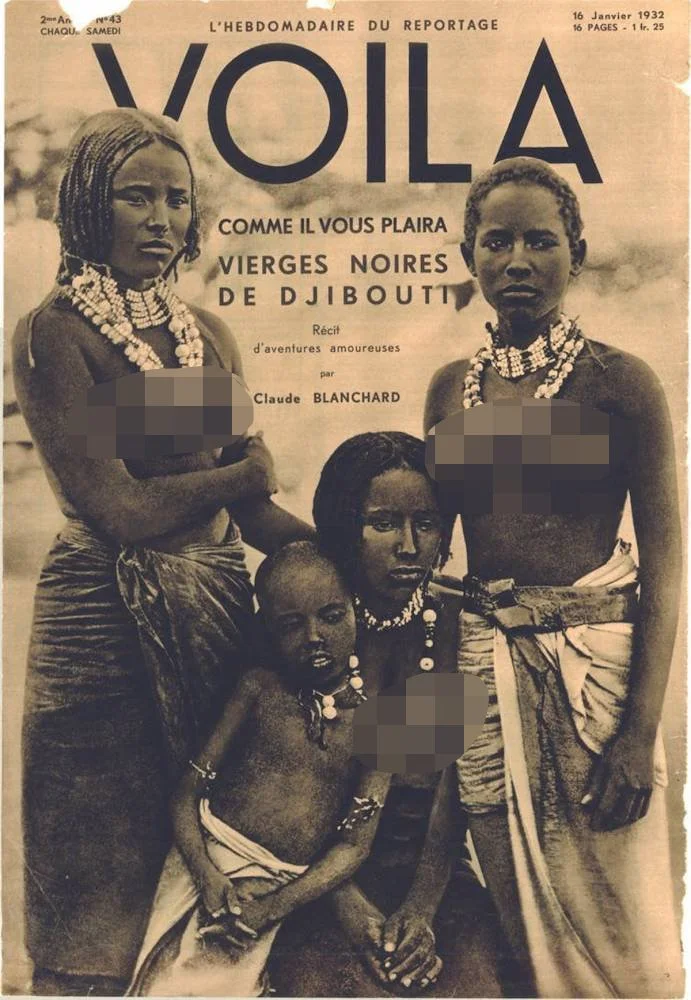
The subjection of black women and the eroticization of their bodies
Even today, the erotization of Black bodies, especially those of young women such as Bell, often presented in postures of submission and with shackles reminiscent of slavery, continue to impinge on society, and pornography in particular.
The connections made between Black bodies and exoticism, their staging in settings and with motifs depicting nature and African culture, complete this stereotyped tableau. Modern mass culture is still influenced by this trope.
From slavery to rights
Bell, "Escapes during the night without shoes or stockings"
The impact of slavery on the collective imagination must never be underestimated, both in terms of intergenerational trauma among the descendants of slaves, and the persistence of misperceptions and violent representations in mass culture.
The imagery associated with enslaved Black women is unequivocal with regards to their sexual subjection: they had to acquiesce to their master’s and his family’s sexual desires. Many children and several male slaves were also victims of this abuse.

Intersectionality of grounds of discrimination
Bell's situation exposes well the notion of intersectionality of the grounds of discrimination: she is young (age), female (gender), Black (colour) and without property (social condition).
An intersectional approach is useful in the field of human rights because it illustrates the specific situation of vulnerability created when several grounds for discrimination co-exist.
The 14 prohibited grounds of discrimination in Québec

Test your knowledge
how old was Bell when she first ran away?