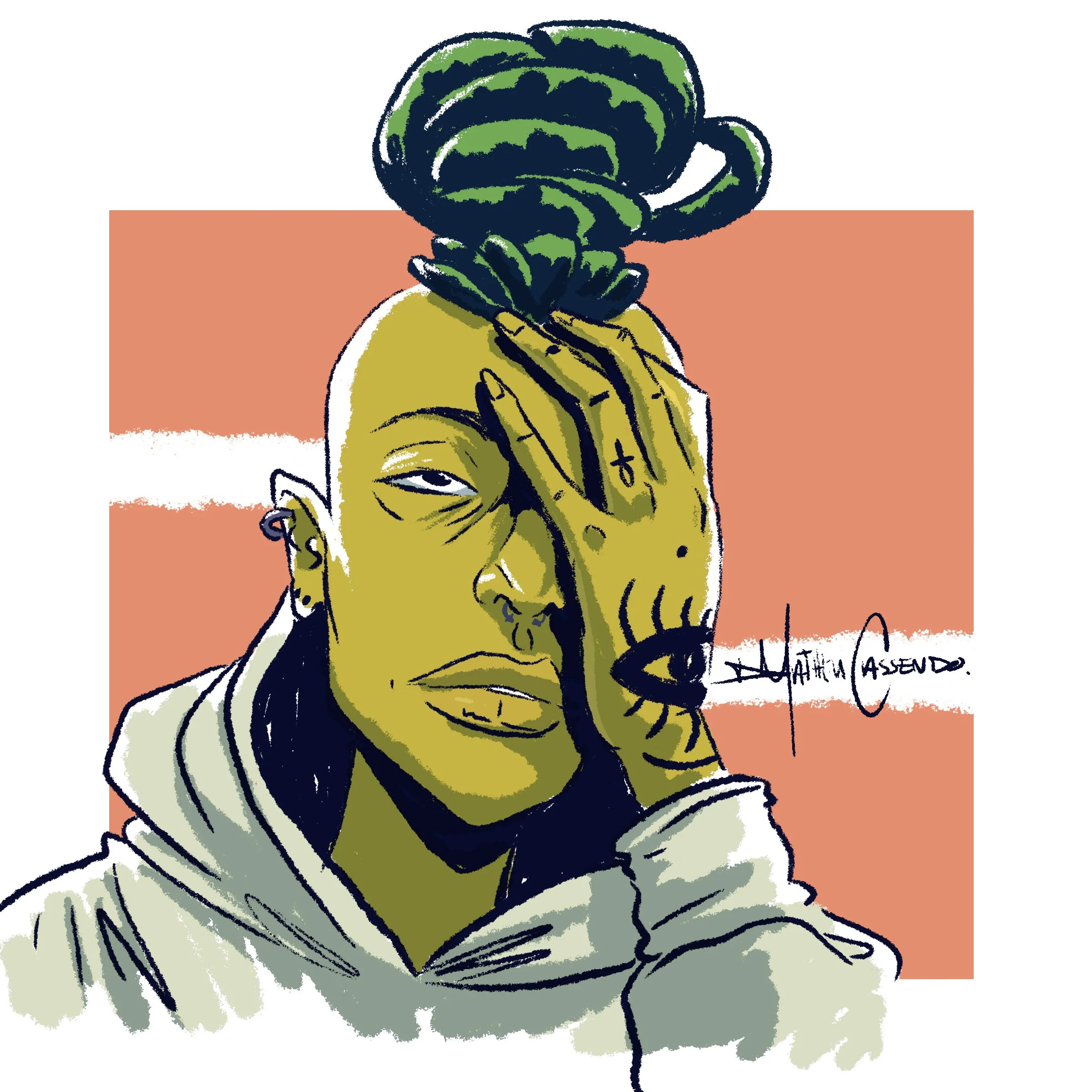
andrew
Caricature as a Tool of Dehumanization
Listen to the storye
Andrew escaped on May 3, 1767, from the innkeeper James Crofton in Montreal. The escape was published in the Quebec Gazette on the 14th of the same month. Of mixed race, Andrew was said to have been born in Maryland and 23 years old. He was described as having crooked fingers, a "remarkable large mouth" and "thick lips," an image not unlike the caricatures of people of African descent. An $8 reward was offered for his return.
Like many other multilingual enslaved persons, he spoke English and French well, and a little Dutch and Erse. The postscript at the end of the announcement specified that he was “remarkable for being clean dress'd and wearing a Handkerchief tied round his Head”. This particular trait connects him to both sides of the Atlantic Ocean, whether it be the turbans worn in Africa or the headscarves found in the cities and plantations of the Americas.
In the 1780s, the Spanish Governor of Louisiana made it mandatory for Black women to cover their heads so that they would not outdo White women with the elegance of their hairstyles. What came to be known as the Tignon laws (the tignon is the name given to these headscarves) backfired, because Black women began to adorn their scarves with great creativity.
Illustrated by DIMANI M. CASSENDO

Read the wanted notice
Liberty papers
One of the most significant elements of this announcement is the statement that Andrew "[was] supposed to have with him forged Certificates of Freedom and Passe." This suggests that his escape was premeditated.
The illustration of his forged "Certificate of Freedom" is inspired by a passport issued in New York on April 21, 1783, to Cato Ramsay for travel to Nova Scotia or elsewhere. Ramsay was a former enslaved person who had taken refuge behind the British lines during the American Revolution of 1775. Several thousand enslaved and free Afro-descendants and Africans sided with the Empire during the War of Independence. Many of these Black Loyalists settled in Nova Scotia and Upper Canada. According to researcher Frank Mackey in his book Done with Slavery, Andrew was the same enslaved person who, a few years earlier, had contested the legality of his servitude in court, claiming that his master at the time was holding him illegally. However, he was unable to prove this statement.
Andrew "a remarkable large mouth"
The search notice depicts Andrew as a caricature of himself. To justify their slavery practices, colonial empires developed an ideology categorising and prioritising human beings according to their skin colour: racism. The "racial" categories created as a result have no scientific validity. They are fabrications designed to legitimize barbaric acts such as the transatlantic slave trade and genocide. In societies with a colonial past, caricatures that emphasize the distinctive features of a racialized individual or group often become common currency, fuelling contempt. Racialized people or groups disappear behind this caricatural mask that burdens them with a homogenous, stereotyped and distorted identity.
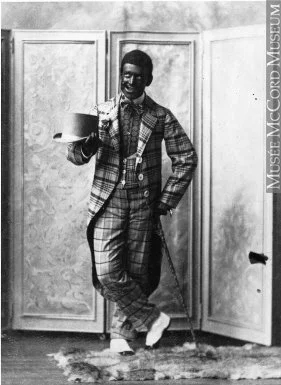
Blackface
In the cabaret era and at the dawn of the silver screen, white (and sometimes black) actors and comedians darkened their face with greasepaint and drew outlandishly large lips over their own to accentuate the features associated with Black people. The characters were almost invariably depicted as stupid, servile and hypocritical. In Québec, blackface existed for a long time. The first performances took place in 1843 near St. Louis Gate in Québec City and then at Montréal’s Théâtre Royale. More recently, one only has to watch television shows from the last few decades to feel uneasy about the caricatured and stereotypical portrayal of Black people.
Équality and dignity
All human beings are equal in value and dignity and have an equal right to the protection of the law. The respect of dignity, this basic right owed to every human being, includes the right to life without being the target of attacks, insults, taunts, or offensive, discriminatory or racist language. Human dignity is violated when a person is exposed to differential treatment on the basis of his or her "race", that imaginary division that stems from slavery and colonization. The same applies to a person who is discriminated against because of his or her color, ethnic or national origin, language, religion or any of the 14 grounds of discrimination prohibited by the Quebec Charter of Human Rights and Freedoms.

Québec's rights and liberties

Test your knowledge
which languages did Andrew speak ?
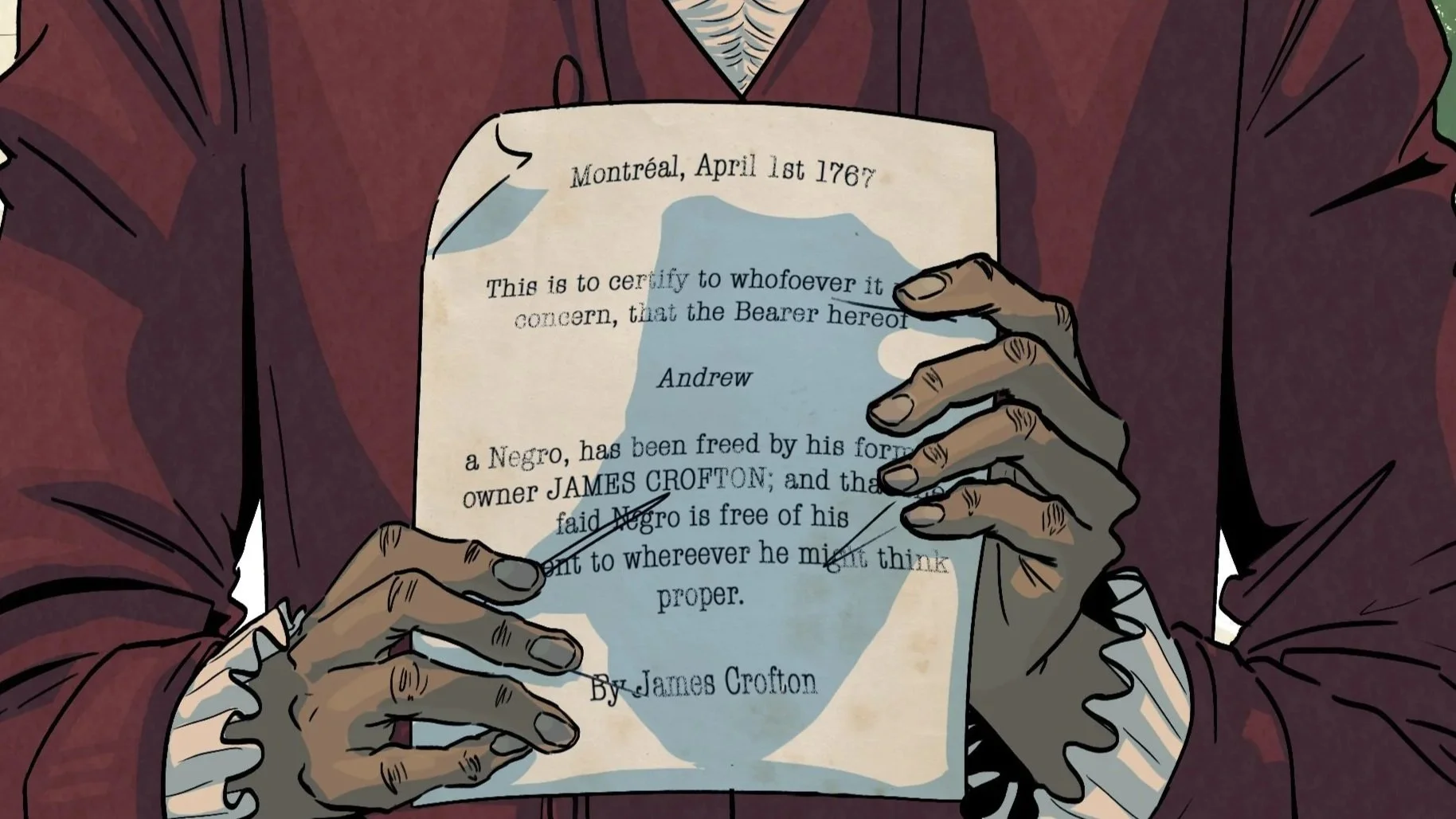
Illustration by DIMANI M. CASSENDO