
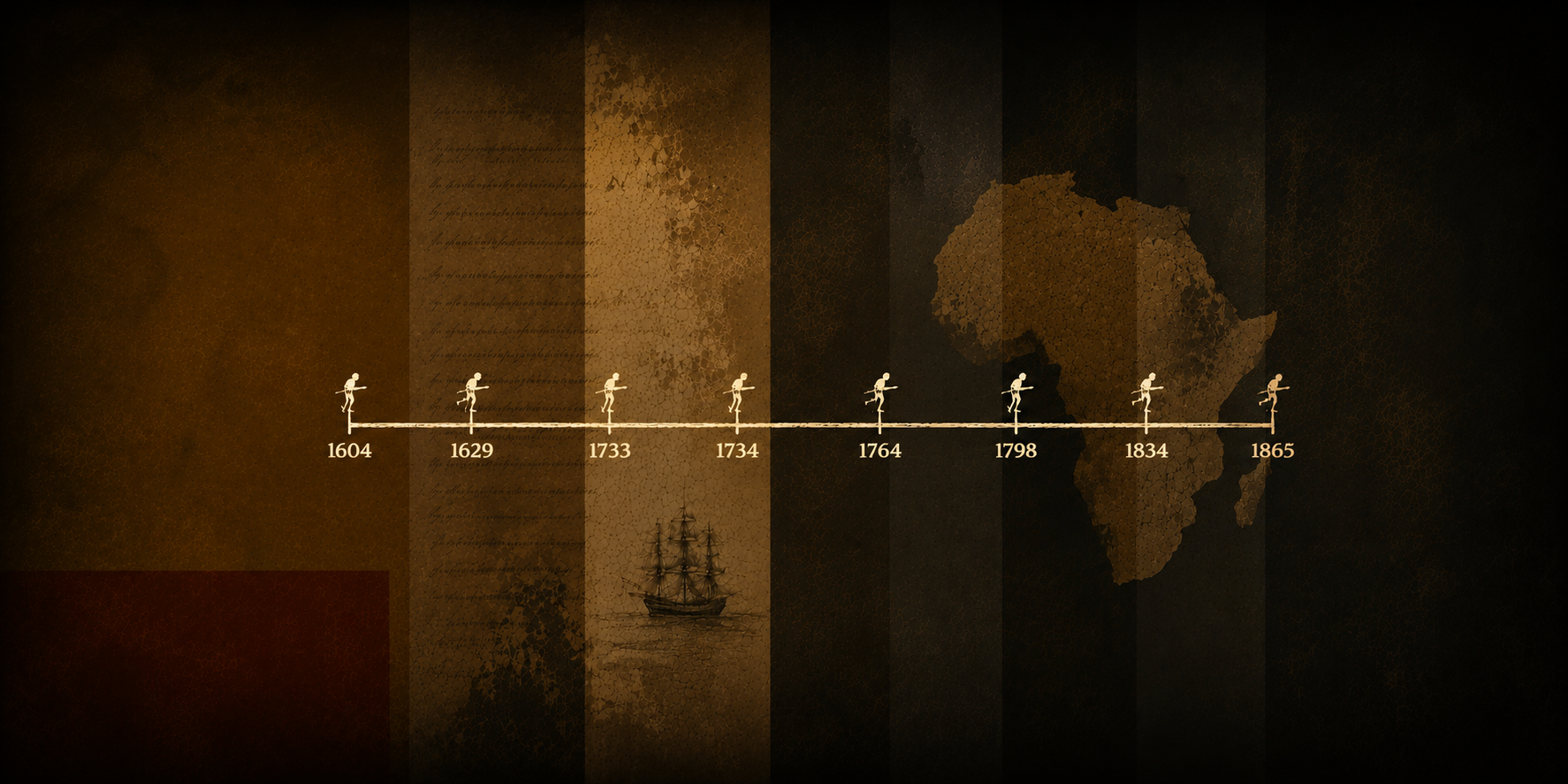
The history of slavery in QUEBEC IN 8 key dates
-
The Quebec Gazette is founded by William Brown; the first ads for enslaved persons to be sold as well as wanted notices are published shortly after.
-
Charlotte, an enslaved african woman, escapes. Judge James Monk refuses to convict her, citing a legal loophole over the status of slavery. He refused to punish all runaways who were later reported to him, which prompted the end of this practice in Lower Canada (Quebec) at the beginning of the 19th century.
-
Formal abolition of slavery in the British Empire. Slavery had started to disappear about 30 years prior in Lower Canada.
-
Abolition of slavery in the United States following the American Civil War. Between the 1820s and 1860s, more than 30,000 enslaved persons in the United States found refuge in Canada through the Underground Railroad.
-
Arrival of Mathieu da Costa with Samuel de Champlain. A black free man, interpreting between Natives and Europeans
-
Olivier Le Jeune arrives in Quebec City. He is the first enslaved African living in Canada.
-
Mathieu Léveillé, an enslaved man from Martinique, is the executioner of New France.
-
Enslaved Marie-Joseph-Angélique is executed by the latter for having set fire to part of the city of Montreal.
fugitifs!
the exhibition

from slavery to human rights
-
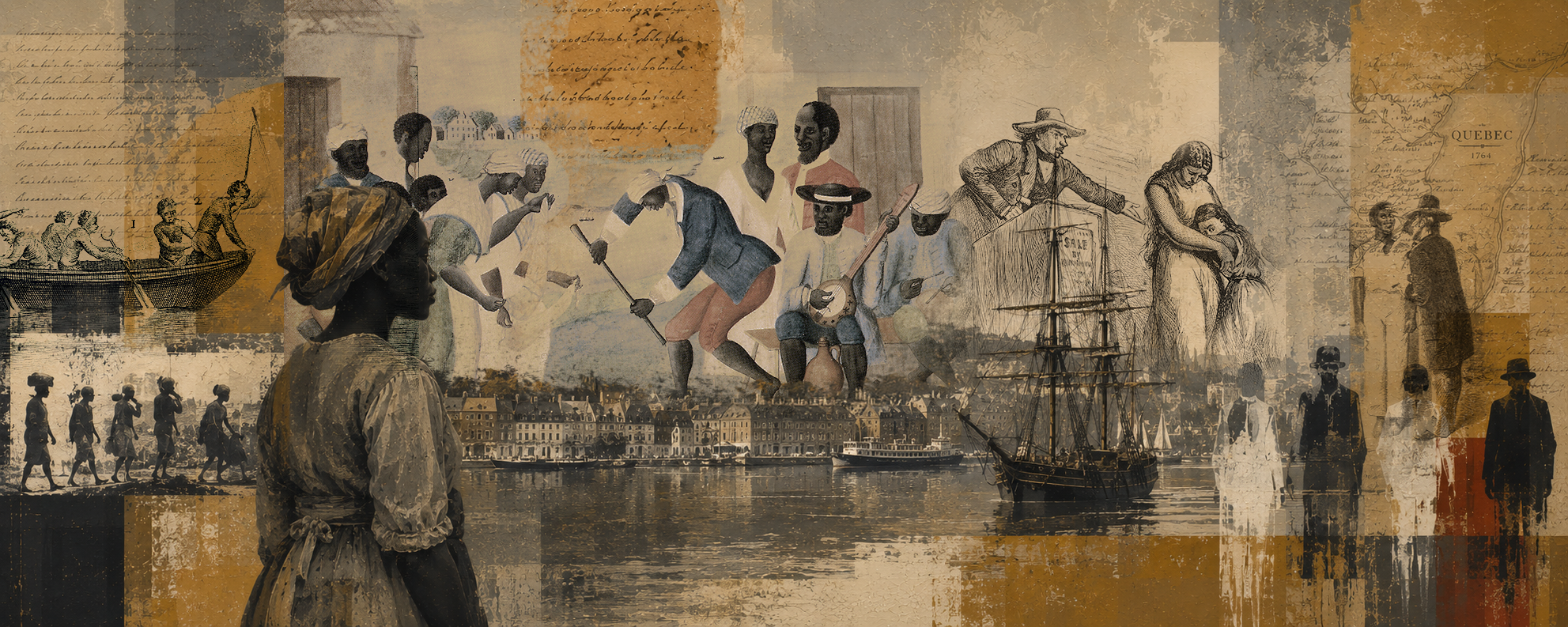
Bought and sold, bequeathed, given away, rented, or traded without regard for their family or marital ties, people held in slavery were treated as property.
Since enslaved persons had no more rights than cattle or objects, their enslavers profited from their forced labor, their bodies (through sexual violence), and their reproduction (by appropriating their children, often as a result of rape by the enslavers) without any restrictions.
Uprooted from their communities, separated from their parents and children, despised, neglected, starved, threatened, abused, confined, and raped with no recourse, many enslaved persons attempted to escape.
Running away, an act of resistance against injustice, was then considered an act of disobedience and insubordination punishable by the enslavers.
-
Slavery is a situation of absolute denial of human rights that allows us to grasp their full significance.
Deprived of rights, anyone in slavery is condemned to carry out the will of their enslavers, even if it leads to their death.
It was to put an end to such abuses that human rights were proclaimed, guaranteeing every human being a set of inalienable rights and freedoms from birth to death.
In 1948, the Universal Declaration of Human Rights proclaimed that “All human beings are born free and equal in dignity and rights. They are endowed with reason and conscience and should act toward one another in a spirit of brotherhood.”
For its part, the International Covenant on Civil and Political Rights, which entered into force in 1966, prohibits slavery in all its forms and reaffirms the principles of fundamental rights and freedoms.
In Quebec, the Canadian Charter of Rights and Freedoms and the Quebec Charter of Human Rights and Freedoms are the legal instruments that protect these rights and freedoms.
Discover these rights and freedoms throughout your visit.